Materials for Kitchen Worktops
Choosing the right material for your kitchen countertop is a crucial decision that affects both the aesthetics and functionality of the space. In this guide, we will explore in detail the various available materials, their characteristics, advantages, and disadvantages, to help you make an informed decision.
Why is it important to choose the right materials for kitchen countertops?
The countertop is one of the most used surfaces in the kitchen. A wise choice ensures durability, ease of maintenance, and an appearance that complements the overall design of your home. Additionally, the selected material influences resistance to stains, heat, and daily wear.
Types of materials for kitchen countertops and their characteristics
Below are the most common materials for kitchen countertops, along with their main characteristics:
Natural stone countertops: Marble, Granite, and Quartz
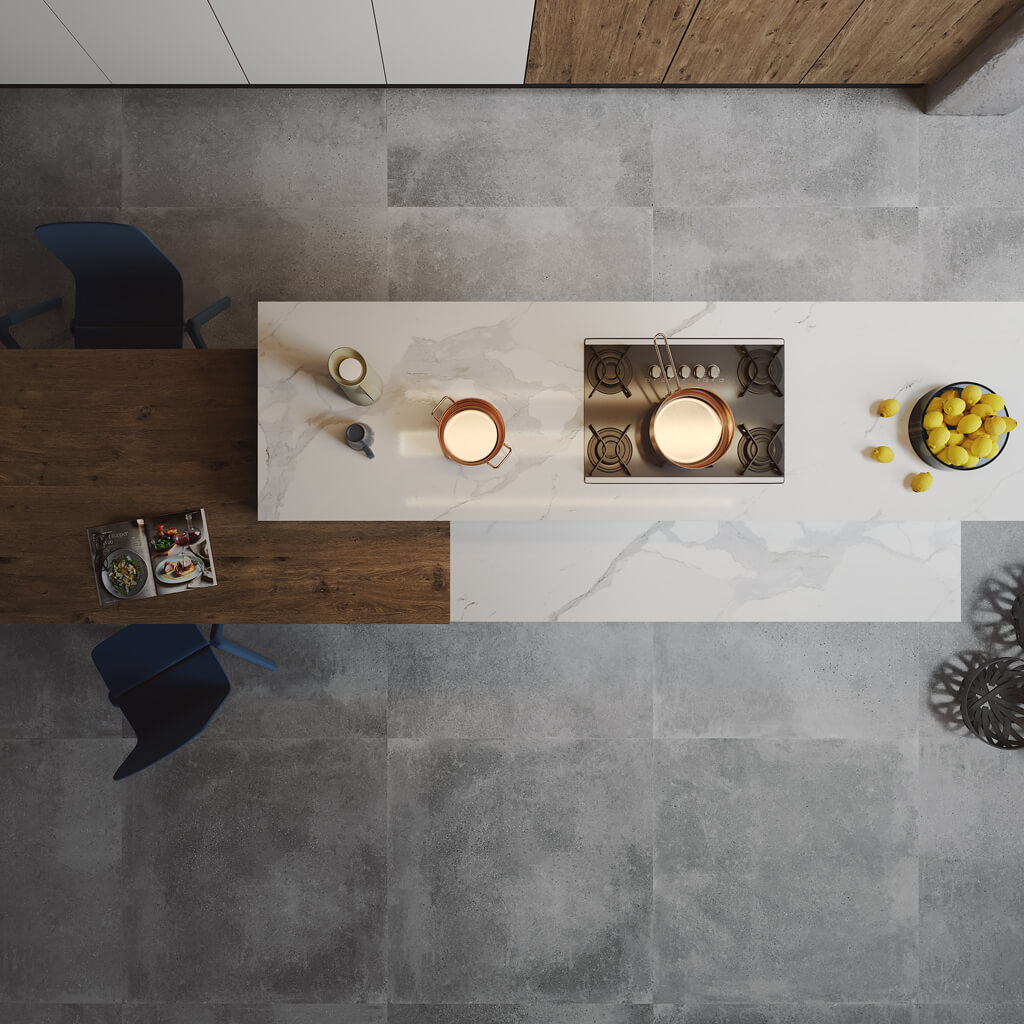
Marble
Advantages:
- Elegant and timeless aesthetics.
- Heat resistance.
Disadvantages:
- Highly porous, making it prone to stains.
- Requires regular maintenance and sealing.
Granite
Advantages:
- Durable and resistant to scratches and high temperatures.
- Low porosity, less prone to stains.
Disadvantages:
- Limited variety of colours and patterns.
- Requires periodic sealing.
Quartz
Advantages:
- Wide range of colours and designs.
- Resistant to stains and scratches.
- No sealing required.
Disadvantages:
- Less heat resistant compared to natural stone.
- High cost.
Wooden countertops: Types, advantages, and maintenance
Advantages:
- Add warmth and a natural look to the kitchen.
- Ideal surface for cutting and preparing food.
Disadvantages:
- Prone to damage from moisture and scratches.
- Requires regular maintenance, such as sanding and sealing.
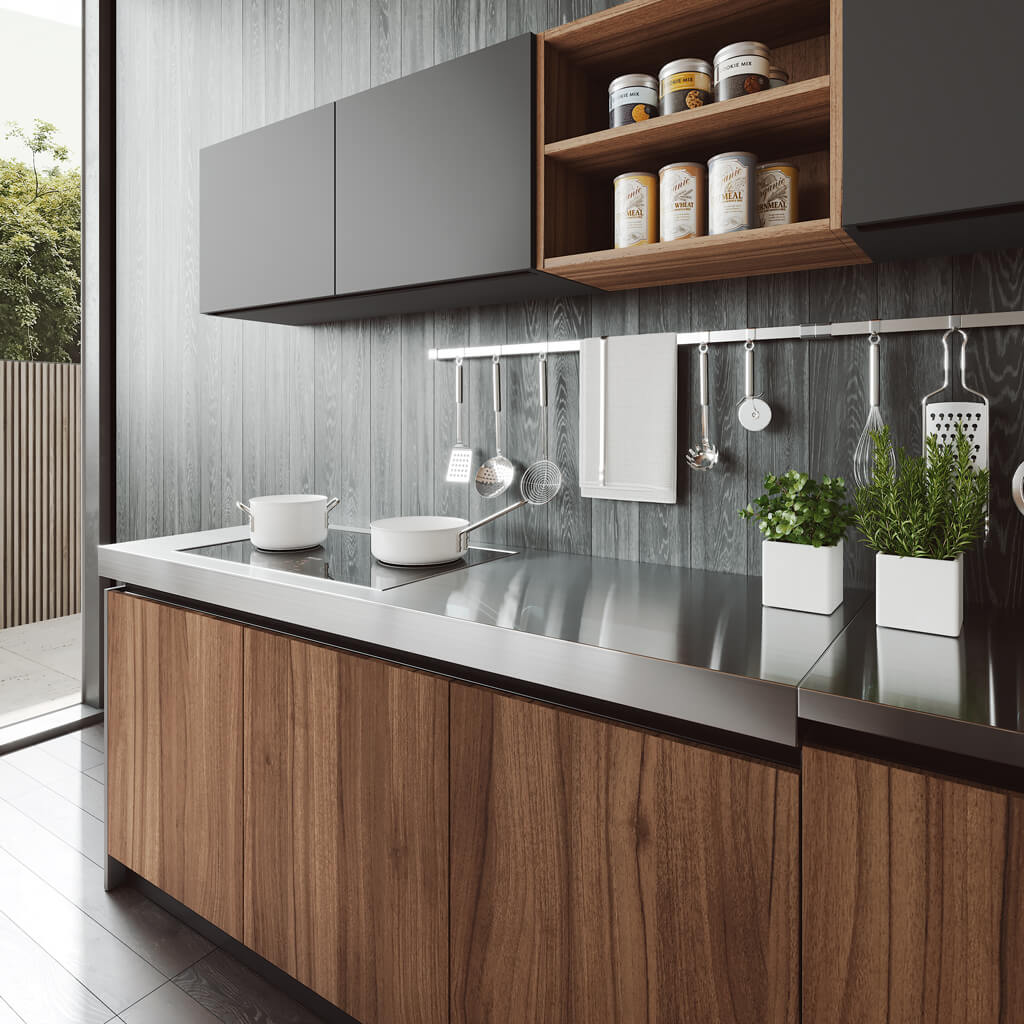
Stainless steel countertops: Modernity and durability
Advantages:
- Highly resistant to heat and stains.
- Easy to clean and maintain hygiene.
- Provides an industrial and modern style.
Disadvantages:
- Can scratch easily.
- May show fingerprints and water spots.
Resin and solid surfaces (Corian and Krion)
Advantages:
- Seamless surface, ideal for continuous designs.
- Available in a wide variety of colours and shapes.
- Easy to repair in case of damage.
Disadvantages:
- Less heat and scratch resistant compared to other materials.
- May discolour over time if exposed to direct sunlight.
Porcelain and Dekton countertops: Extreme durability
Advantages:
- Highly resistant to high temperatures, scratches, and stains.
- Low porosity, making them hygienic and easy to clean.
- Available in a variety of finishes and colours.
Disadvantages:
- Complex installation requiring specialised professionals.
- High cost compared to other materials.
Laminated countertops: The economical and versatile option
Advantages:
- Affordable and available in a wide range of designs that imitate other materials.
- Easy to install and replace.
Disadvantages:
- Less durable and prone to heat and moisture damage.
- May peel or warp over time.
5 Keys to choosing the best material for your countertop
When selecting the material for your countertop, it is essential to consider different aspects that will impact both its functionality and long-term appearance.
Heat resistance
If you cook frequently and place hot pots directly on the surface, choose a material that can withstand high temperatures without damage, such as granite or porcelain.
Maintenance
Some materials require continuous care, like marble or wood, while others, such as quartz or stainless steel, are easier to maintain.
Aesthetics
The countertop should integrate with the overall style of the kitchen and home. Do you prefer a modern and minimalist finish or a rustic and cosy look?
Budget
Consider not only the cost of the material but also installation and long-term maintenance. Some options may seem inexpensive initially but will require frequent replacement.
Daily use
If your kitchen is a high-traffic space, it is advisable to choose materials that are durable and easy to clean, avoiding those that deteriorate easily.
Do not make the 4 common mistakes when choosing a countertop
Many people make mistakes when selecting the material for their countertop, resulting in unnecessary expenses or a poor user experience. Some of the most frequent mistakes are:
Choosing based on aesthetics alone
A material may be visually appealing, but if it is not functional for your lifestyle, it can become a problem.
Not considering maintenance
Some materials, like marble, require periodic sealing to prevent stains. If you are not willing to carry out this maintenance, it is better to choose another option.
Not calculating the budget correctly
In addition to the cost of the material, it is important to consider installation, possible repairs, and maintenance.
Not requesting samples before buying
Lighting and surroundings can affect the appearance of a countertop. Requesting samples will help you visualise how it will look in your kitchen.
Comparison: Which are the best materials for kitchen countertops?
Below is a comparative table of the mentioned materials, evaluating their durability, aesthetics, maintenance, and cost:
| Material | Durability | Aesthetics | Maintenance | Cost |
| Marble | Medium | Elegant | High | High |
| Granite | High | Classic | Medium | Medium-High |
| Quartz | High | Versatile | Low | High |
| Wood | Medium | Warm | High | Medium |
| Stainless steel | High | Industrial | Low | Medium |
| Resin (Corian/Krion) | Medium | Modern | Medium | Medium-High |
| Porcelain/Dekton | High | Contemporary | Low | High |
| Laminates | Low | Versatile | Medium | Low |
Kitchen countertop materials and prices in 2025
The cost of a countertop depends on various factors, such as material, thickness, finish, and installation complexity. Below is a more detailed price guide for 2025:
| Material | Approximate price €/m² | Variations according to thickness and finish |
| Marble | €250 - €600 | Polished or matte, 2 cm or 3 cm |
| Granite | €150 - €400 | Exotic colours vs. standard |
| Quartz | €200 - €500 | Matte, glossy, textured |
| Wood | €100 - €300 | Oak, walnut, bamboo |
| Stainless steel | €200 - €500 | Satin, brushed, fingerprint-resistant |
| Resin (Corian/Krion) | €250 - €600 | Customisation of colour and shape |
| Porcelain/Dekton | €300 - €700 | Marble, stone, or cement effect |
| Laminates | €50 - €150 | High pressure vs. low pressure |
Prices may vary depending on region and supplier.
Tip: If you are looking for a durable countertop without spending too much, standard colour granite and basic quartz offer an excellent value for money.
Where to buy kitchen countertop materials at the best price?
If you are looking for quality materials at a good price, consider the following options:
- Specialised kitchen stores: Companies like Kitchen Grup offer high-end materials with personalised advice.
- Direct manufacturers and distributors: You can save costs by buying directly from the manufacturer. Kitchen Grup, in addition to having its own stores, is also a manufacturer of bespoke and customised kitchens!
Tip: Before purchasing, request samples and check the warranty and installation conditions.
New kitchen countertop materials in 2025
The countertop sector is constantly evolving, and in 2025 new options are emerging that combine innovation, durability, and sustainability. Here are some of the most notable trends:
Enhanced ultracompact surfaces
Materials such as Dekton have evolved, offering greater impact resistance and expanding their range of finishes to imitate natural stone, wood, and concrete more realistically.
Antibacterial countertops
Thanks to special treatments, some surfaces now incorporate antimicrobial technology, making them more hygienic and safe for food preparation.
Eco-friendly countertops
Sustainability is a growing trend. Some brands are manufacturing countertops from recycled materials, reducing their environmental impact without compromising durability or aesthetics.
Smart countertops
Technology comes to the kitchen with countertops that incorporate wireless charging for mobile devices, integrated LED lighting, and temperature sensors to prevent accidental burns.
Tip: If you are looking for a countertop that combines innovation and functionality, explore models from brands investing in these technologies.
Conclusion: Which is the best material for kitchen countertops according to your needs?
There is no single material that is the best for everyone. The choice will depend on factors such as budget, desired aesthetics, and intended use.
If you seek extreme durability, porcelain or Dekton are ideal.
If you prefer classic elegance, marble or granite may be the best option.
If you need an economical choice, laminates are a viable alternative.
If you want a balance between aesthetics and functionality, quartz is a safe bet.
To find the perfect countertop for your kitchen, visit Kitchen Grup and discover the options that best suit you. Find the perfect countertop for your kitchen with Kitchen Grup! Visit our website and explore personalised options for every style and need.
Frequently Asked Questions about Kitchen Countertop Materials
1. What is the most durable material for a kitchen countertop?
Porcelain and Dekton stand out for their high resistance to impacts, heat, and stains.
2. Which material is easiest to maintain?
Quartz and stainless steel require little maintenance and are easy to clean.
3. Are wooden countertops recommended?
Yes, but they require constant maintenance to prevent damage from moisture and heat.
4. Which is the most economical countertop?
Laminated countertops are the most affordable option, though less durable.
5. Do marble countertops stain easily?
Yes, due to their porosity. Periodic sealing is recommended.
6. Where can I see models and get advice for my kitchen?
At Kitchen Grup you can find a wide variety of options and experts who will advise you.