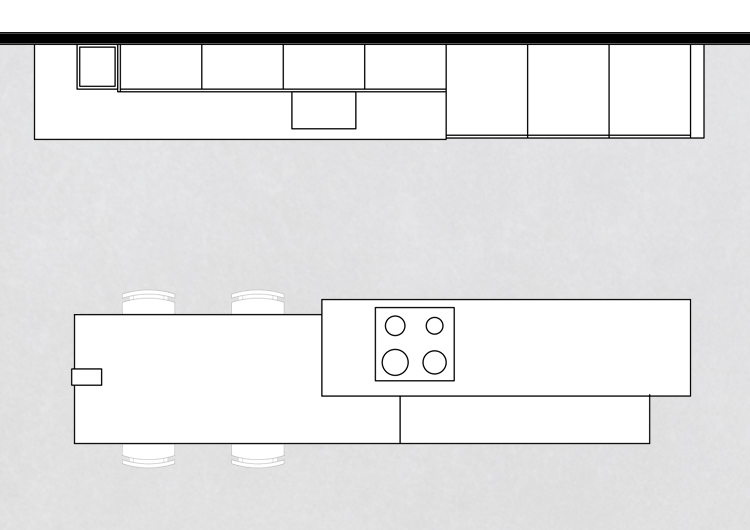
Kitchen measurements: Complete guide
A functional and ergonomic kitchen largely depends on its measurements. From the height and depth of the cabinets to the ideal distance between different work areas, every centimeter counts to create a comfortable, efficient, and pleasant space.
Below, we will detail the most recommended measurements for kitchen cabinets, as well as some key tips to adapt these recommendations to your needs.
The importance of measurements in kitchen design
When designing a kitchen, measurements are an essential factor that defines how the space feels and is used. Proper proportions and distances ensure that all activities (such as cooking, cleaning, and storage) are comfortable and quick. Additionally, it reduces the risk of physical discomfort from awkward postures, making the kitchen a place where you feel comfortable and productive.
Standard measurements for kitchen cabinets
Why is it important to follow measurement standards? Standard measurements make space planning easier and optimize its use, but it is important to remember that each kitchen has unique needs, and ideally, these standards should be adapted to the characteristics of the space and the user’s preferences. For this, a custom kitchen is recommended.
Standard measurements for lower kitchen cabinets
Lower cabinets are essential for storing utensils and food. The depth and height of these cabinets help ensure comfortable access and aesthetic integration with the countertop.
Depth of lower cabinets
The standard depth is 60 cm plus the door, sufficient to comfortably store utensils, pans, and other large items without encroaching on countertop space.
Height of lower cabinets
Generally, the standard height is 92 cm, including the countertop. This height is comfortable for most people, preventing postures that could affect the spine while working in the kitchen.
High-capacity lower cabinets
When it comes to maximizing kitchen space, high-capacity lower cabinets are an excellent option. These cabinets are designed to offer greater depth and height, allowing for more efficient storage.
Advantages of high-capacity lower cabinets:
- More storage space: 69 cm deep cabinets are perfect for storing bulky items.
- Optimized kitchen design: Their robust and spacious structure integrates perfectly into modern designs.
- Versatility of use: Ideal for large utensils, keeping everything organized.
Standard measurements for upper kitchen cabinets
Upper cabinets are ideal for extra storage of food and less frequently used utensils. It is essential that they are at a height that allows safe access.
Height of upper cabinets
Typically, the height ranges between 45 and 60 cm from the countertop, ensuring comfort and functionality.
Depth of upper cabinets
The recommended depth is 34 cm plus the door, preventing them from protruding too much.
Kitchen countertop measurements
Countertops are the main work area, so their height and depth are key to ensuring a comfortable posture.
Countertop height
The ideal height is 85 to 95 cm, allowing a comfortable posture and facilitating the use of integrated appliances.
Countertop depth
A depth of 63 cm is usually ideal for most kitchens.
Distance between cabinets and work areas
A crucial aspect of design is the distance between cabinets, aisles, and work areas. Proper planning allows for smooth circulation.
Aisles and free space
It is recommended to leave at least 90 cm of space between opposing cabinets. In small kitchens, this can be reduced to 75 cm.
The work triangle
The work triangle concept consists of maintaining a comfortable distance between the cooking, washing, and storage areas. Each side should measure between 1.2 and 2.7 meters.
Measurements for small vs. large kitchens
Measurements also depend on the kitchen size. Large kitchens can include islands and more circulation space, while small kitchens should prioritize compact measurements.
Common mistakes when choosing kitchen measurements
One of the most common mistakes is underestimating the space needed for movement. It is also important not to place the countertop too low or too high.
How to take correct measurements for kitchen cabinets
Key steps:
- Measure the height from floor to ceiling.
- Define the position of the main appliances.
- Consider circulation space.
- Consult a kitchen design expert.
Adapting measurements to personalized kitchen styles
Kitchen Grup designs and manufactures custom kitchens, combining ergonomic standards with the personal preferences of each client. We use high-quality materials to ensure a unique experience.
Explore our custom kitchen fabrication options at Kitchen Grup and transform your kitchen into a unique and functional space.