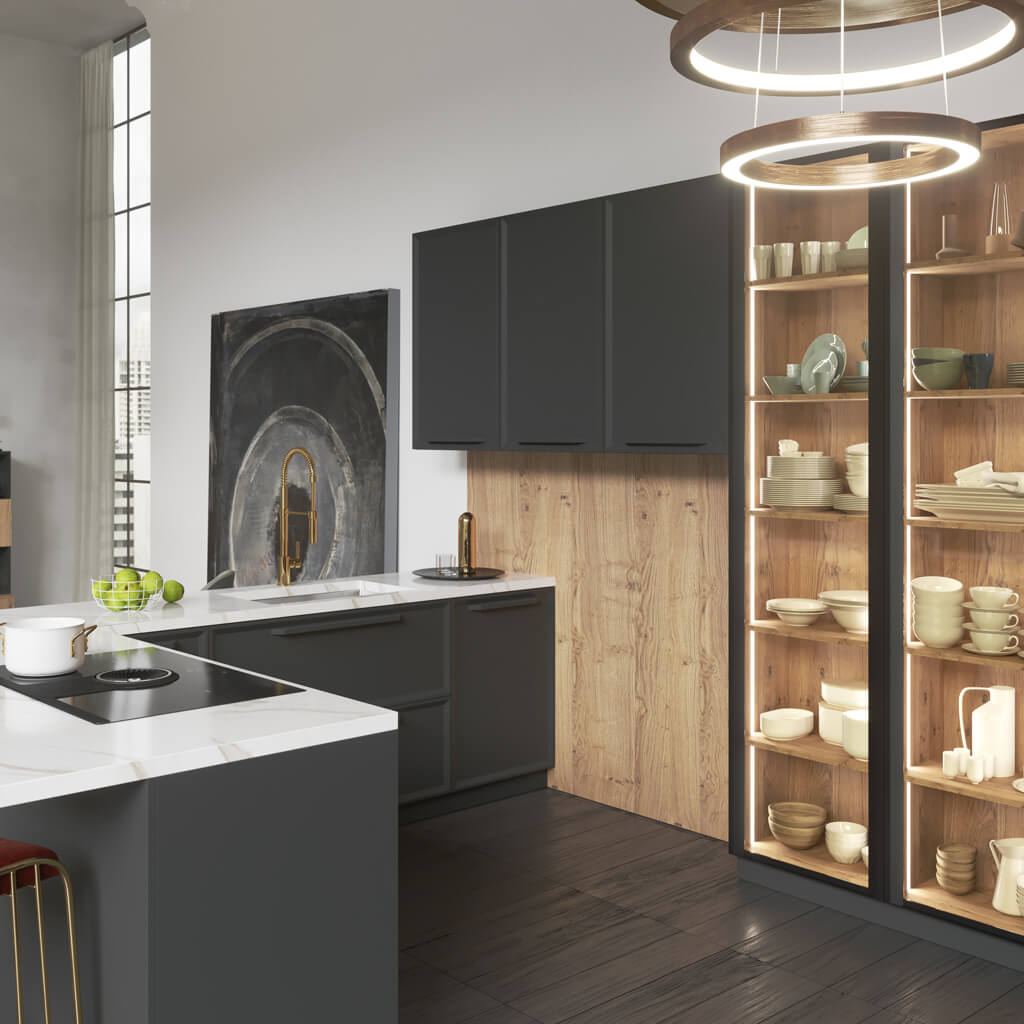
Kitchen Bars or Islands
The design of modern kitchens has evolved significantly in recent years, with kitchen bars and islands as central elements in most renovations and new projects. These features not only provide a sophisticated and modern look, but also improve functionality and workflow in the kitchen.
However, choosing between a bar or an island can be a difficult decision for many homeowners. This article will guide you through the advantages and disadvantages of each option, design considerations, and help you determine which is best for your space.
What are kitchen bars and islands?
Kitchen bars and islands are additional surfaces integrated into the kitchen design to enhance its functionality.
- Kitchen bars: Often called peninsulas, they are connected to a wall or cabinet.
- Islands: Independent elements that offer greater versatility in terms of location and use.
The concept of integrating bars and islands in modern kitchens comes from the desire to create more open and social spaces. Both options allow for smoother interaction between the kitchen and living or dining areas, reflecting contemporary open-space trends.
Advantages of choosing a kitchen bar
Kitchen bars are ideal for smaller spaces or for those who want a smooth transition between the kitchen and other areas of the home. Advantages include:
- Space-saving: Being connected to a wall or cabinet, the bar requires less space than a standalone island.
- Additional functionality: Provides extra surface area for dining, food preparation, or even working, without the need for a separate piece of furniture.
- Design flexibility: Can be customized in height, length, and materials to match the kitchen’s aesthetics and needs.
Disadvantages of kitchen bars
- Less storage space: Compared to an island, a bar generally offers less room for utensils or appliances.
- Layout limitations: Being attached to a wall may restrict the arrangement of cabinets and appliances in the kitchen.
It’s important to consider the available space, bar height (ideally between 90 cm and 110 cm), and how it integrates with the overall kitchen design.
Advantages of kitchen islands
- Additional storage space: Islands offer ample drawers and cabinets for better storage.
- Versatility of use: Can incorporate a sink, cooktop, and serve as a workspace, dining area, or even a bar.
- Style and presence: Islands often become the focal point in the kitchen, adding a significant design element.
Disadvantages of kitchen islands
- Requires more space: Installing an island requires a fairly large kitchen, which may not be feasible in smaller spaces.
- Higher cost: Being a standalone element with more customization options, islands are usually more expensive to implement.
Evaluate the kitchen size (at least 15 m² is ideal), desired functionality (sink, cooktop, storage), and kitchen traffic flow before installing an island.
Kitchen Bar vs. Kitchen Island Comparison
Available space and layout
If your kitchen is small, a bar may be more suitable, while an island requires more space to be functional and comfortable.
Functionality and daily use
Bars are practical for quick solutions; islands are perfect for cooks needing more workspace.
Style and aesthetics
Islands offer more customization options in materials, shapes, and functions.
Costs and materials
Bars are usually more affordable, while islands represent a higher investment.
Kitchen Islands: Tips, designs, and functionalities
Ideal dimensions for a kitchen island
Should be at least 1 m long and 60 cm wide; 2 m is recommended for optimal functionality.
Kitchen size with island
Leave at least 1 m free around the island to allow comfortable movement.
Island with sink and cooktop
Increases functionality but requires careful planning for water and electrical installations.
Island countertop
Recommended materials: granite, quartz, or wood, for durability and style.
Kitchen Bar Designs
U-shaped Kitchens with Bar
- Advantages: Extra prep area and informal dining space.
- Recommendations: Maintain adequate space between bar and cabinets for comfort.
Modern Kitchens with Bar
- Style and functionality: Bar can include recessed lights or integrated power outlets.
- Recommended materials: Quartz, stainless steel, or matte wood.
L-shaped Kitchens with Bar
- Space optimization: Ideal for dividing areas and sharing space with the dining area.
- Applications: Food prep or quick meals.
Rustic Kitchens with Bar
- Key elements: Solid wood, carved details, and sturdy stools.
- Design tip: Warm lighting, open shelves, and natural decorative elements.
Linear Kitchens with Bar
- Ideal for small spaces: Bar can serve as an impromptu dining table or prep area.
- Minimalist style: Neutral colors and smooth materials create a tidy and visually expansive space.
Conclusion: Which is best for you?
The choice depends on your needs and kitchen layout: a bar for small spaces, an island for larger, multifunctional kitchens. At Kitchen Grup, we offer customized solutions to ensure you get the design and functionality you need. Explore our made-to-measure kitchens and let our experts design the kitchen of your dreams.
Frequently Asked Questions
What is the ideal height for a kitchen bar?
Generally between 90 cm and 110 cm.
What dimensions should an island have?
At least 1 m long and 60 cm wide.
Is it better to have an island with sink and cooktop?
Depends on your needs; offers more functionality but complicates installation.
How much space is needed for a kitchen with island?
At least 1 m free around the island.
Are kitchen islands more expensive than bars?
Yes, they usually require a higher investment.
What is more practical for small kitchens, a bar or an island?
A bar is usually more practical.
¡Contact us today to start building your kitchen!