How to choose the best kitchen worktop: a guide to materials
Choosing a kitchen worktop is a decision that goes far beyond selecting a colour or finish. It is one of the surfaces that is used most frequently on a daily basis and must meet the needs of each home: from how often we cook to the level of resistance, maintenance and cleaning we are willing to undertake.
In addition, the worktop has an important aesthetic role within the project. Its colour, texture, thickness and finish can completely change the perception of a kitchen, especially when it forms part of an island or peninsula.
For this reason, the best worktop is not necessarily the most expensive, nor is there a single material that is suitable for every kitchen. The choice depends on how the kitchen is used, the characteristics of the space, the design we are looking for and the features we consider a priority.
In this guide, we explain how to choose a kitchen worktop, which factors are worth considering before making a decision and what the main options available are.
What should you consider when choosing a kitchen worktop?
Before comparing materials, it is worth defining what we expect from the worktop. Not all kitchens are used in the same way and, therefore, they do not necessarily need exactly the same features.
These are some of the main aspects you should consider.
Daily use of the kitchen
A kitchen that is used several times a day is subject to different wear and tear from one that is used occasionally.
If you cook regularly, prepare food directly on the surface, use hot cookware or have a large family, it may be particularly important to prioritise resistance, ease of cleaning and simple maintenance.
On the other hand, in a kitchen used occasionally, other criteria may carry greater weight, such as design, budget or choosing a material with specific aesthetic characteristics.
Heat resistance
The worktop's proximity to the hob makes thermal resistance an important consideration.
However, not all materials react in the same way to high temperatures. Therefore, before choosing, it is worth checking the specific recommendations of the manufacturer and understanding what precautions each surface requires.
It is also important to remember that a material's general resistance does not mean that it is advisable to place any extremely hot cookware directly on it.
Resistance to stains and liquids
Oil, coffee, wine, sauces, juices and other products are part of everyday kitchen use.
Absorption and resistance to staining depend on the material, its composition, finish and treatment. In this respect, low-porosity surfaces tend to make everyday cleaning easier, although the relevant maintenance instructions should always be followed.
Resistance to impacts and scratches
The worktop functions as a genuine working surface. Utensils, small appliances, containers and other objects are placed on it.
Resistance to scratching and impacts is therefore another criterion worth considering. In addition, special attention should be paid to areas such as edges, corners and sink or hob cut-outs, which may require a specific technical solution.
Ease of cleaning and maintenance
Not all materials require the same care.
Some surfaces allow for very simple daily cleaning, while others may require additional precautions or specific treatments to preserve their properties.
Before deciding, it is worth asking yourself how much maintenance you want to devote to the worktop in the long term.
Aesthetics and kitchen style
The worktop is also a fundamental element of the design.
We can find smooth, veined surfaces with the appearance of natural stone, wood, concrete or different decorative finishes. The choice will depend on the style of the kitchen and how we want to combine it with the cabinets, flooring, walls and other elements.
In open-plan kitchens, the worktop can also play an even more important role because it forms part of the visual composition of the space.
Available budget
The price of a worktop depends on numerous factors: material, dimensions, thickness, finish, machining, number of pieces, edge type, sink and hob cut-outs, transport and installation, among others.
For this reason, comparing only the price per square metre can be misleading. Two worktops with a similar surface area may have very different manufacturing and installation costs depending on the complexity of the project.
Main materials for kitchen worktops
Once we have defined the criteria that matter most to us, we can compare the main materials used for kitchen worktops.
There is no universally better material. Each option has specific characteristics and may be more suitable for certain projects.
Porcelain worktops
Porcelain surfaces have become one of the most widely used options in kitchen projects where high performance and highly versatile aesthetics are sought.
Among their characteristics are low absorption and good performance in everyday use, although the specific properties always depend on the product and manufacturer selected.
Another advantage is their aesthetic variety. There are finishes that reproduce the appearance of natural stone, marble, concrete and other materials, allowing them to be integrated into different kitchen styles.
They are particularly interesting in projects where the aim is to combine resistance, ease of maintenance and design possibilities.
Even so, the design of edges, machining, supports and cut-outs must be carried out correctly, as no surface should be considered completely indestructible.
Quartz worktops
Quartz worktops offer a homogeneous surface and a wide variety of colours and finishes.
Their low porosity makes everyday cleaning and maintenance easier, while their aesthetic variety allows solutions to be found for both modern kitchens and projects with a more classic aesthetic.
One aspect that should be taken into account is their behaviour when exposed to high temperatures. Depending on the specific composition, the manufacturer may establish certain usage recommendations, so it is always advisable to consult the product guidelines.
They are an interesting option for those looking for ease of cleaning, aesthetic consistency and good performance for everyday use.
Granite worktops
Granite is a natural stone that stands out for its resistance and the uniqueness of each piece.
As it is a natural material, each slab has variations in colour, texture and pattern. This characteristic can actually become one of its main attractions.
Its performance depends on the specific stone and the treatment applied, so not all granite should be considered identical.
It is a particularly interesting alternative for those who value natural stone and the character that each piece brings.
Marble worktops
Marble is one of the most recognisable materials in interior design and stands out mainly for its aesthetics.
Its natural veining and variations mean that each piece has its own appearance. However, it is also important to understand its particular characteristics before choosing it.
Certain acidic products can affect its surface and cause changes to the finish. Therefore, a marble worktop requires different maintenance expectations from other technical surfaces.
It can be an excellent choice when looking for the beauty and character of natural stone, provided that its behaviour over time is understood and accepted.
Wooden worktops
Wood brings a warm and natural feel that can be particularly attractive in certain kitchen styles.
However, it requires different maintenance from mineral or porcelain surfaces. Moisture, heat and everyday use must be taken into account, especially around the sink and other working areas.
It is a suitable alternative for those who prioritise warmth, a natural appearance and a more welcoming aesthetic, while accepting the material's specific maintenance requirements.
Laminate worktops
Laminate worktops are a common alternative when looking for a functional solution and a wide range of aesthetic options with a more contained budget.
There are currently designs capable of visually reproducing wood, stone and other materials.
Their performance depends on the quality of the product and its correct installation. Particular attention should be paid to areas exposed to moisture and to the manufacturer's usage recommendations.
They are an interesting option for certain projects where budget and decorative variety play an important role in the decision.
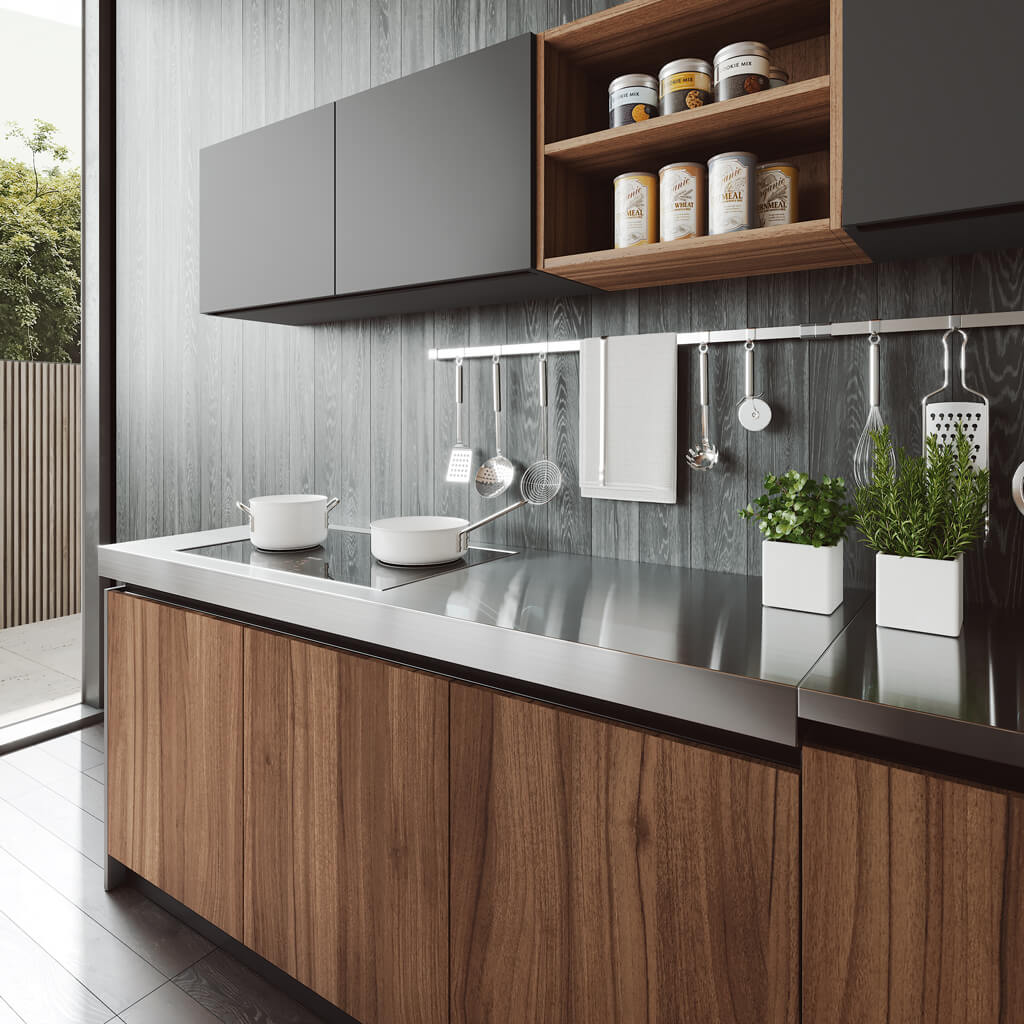
Stainless steel worktops
Stainless steel is common in certain professional environments and can also be used in domestic kitchens, particularly when an industrial or professional aesthetic is desired.
It is durable, hygienic and easy to clean, although its surface may show certain signs of use and small scratches more easily.
Therefore, its selection should respond to both functional and aesthetic criteria.
Solid surfaces and other materials
There are also different solid surfaces and composite materials on the market that offer specific design possibilities.
Some of these solutions allow very discreet joins, special shapes or certain integrated elements to be created.
As with other materials, it is important to analyse the characteristics of the specific product and not generalise all the features of a category to every manufacturer or finish.
Comparison of materials for kitchen worktops
The following table provides an initial general comparison. It does not replace the technical specifications of the specific product, as performance may vary depending on composition, manufacturer, finish, thickness and installation system.
| Material | Resistance and performance | Maintenance | Main characteristics | May be interesting if... |
|---|---|---|---|---|
| Porcelain | Very high for certain properties | Low | Low absorption, aesthetic variety and good resistance | You are looking for high performance and simple maintenance |
| Quartz | High for everyday use | Low | Homogeneity, variety of colours and easy cleaning | You prioritise practicality and aesthetic variety |
| Granite | High, depending on the stone | Low/medium | Natural stone with unique variations | You want a durable natural stone worktop |
| Marble | Good, with specific considerations | Medium/high | High aesthetic value and natural veining | You prioritise design and natural character |
| Wood | Variable depending on species and treatment | Medium/high | Warmth and natural appearance | You are looking for a welcoming kitchen and accept its maintenance requirements |
| Laminate | Suitable for certain uses | Low | Variety of designs and generally more affordable price | You are looking for a functional and economical solution |
| Stainless steel | High | Low | Hygienic, durable and professional aesthetic | You are looking for an industrial or professional aesthetic |
| Solid surface | Variable depending on the product | Low/medium | Possibility of seamless solutions and special shapes | You are looking for integration and specific design solutions |
Which worktop should you choose according to your needs?
A much more practical way to decide is to start with what you need in your kitchen and then look for the materials that best meet those needs.
Which worktop should you choose if you cook a lot?
In a kitchen used intensively, it is advisable to prioritise resistance, ease of cleaning, heat performance and maintenance.
Porcelain surfaces and certain technical surfaces may be particularly interesting for this type of project, although the specific performance of the selected product should always be checked.
Which worktop should you choose if you want low maintenance?
If you want to spend as little time as possible on maintenance, it is advisable to prioritise surfaces that are easy to clean and have low absorption.
Low-porosity technical surfaces can be particularly practical for everyday use.
Which worktop should you choose if you want natural stone?
If what you are looking for is the uniqueness of natural stone, granite, marble and other stones can offer an aesthetic that is impossible to reproduce exactly.
In this case, in addition to choosing the type of stone, it is worth selecting the specific piece and understanding its characteristics, treatment and maintenance requirements.
Which worktop should you choose if you have a limited budget?
The budget should be assessed by taking the complete project into account, rather than the material alone.
Laminate worktops can offer an interesting solution when you are looking to control the investment, while other alternatives involve a higher initial investment but may provide different levels of performance, durability or aesthetic characteristics.
The important thing is to establish your priorities before making a decision.
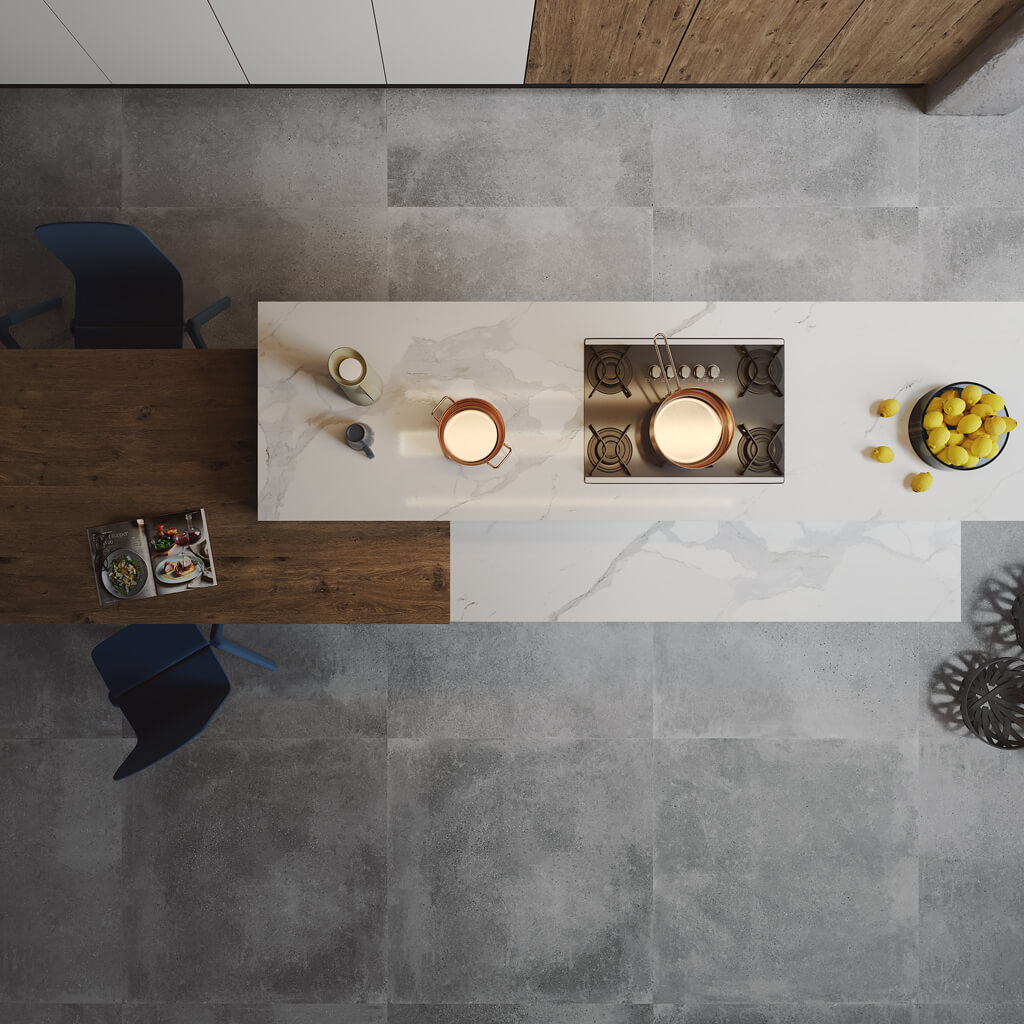
Which worktop should you choose for a kitchen with an island?
In a large island, in addition to the characteristics of the material, the dimensions of the available pieces, layout, joins, edges and direction of the pattern become particularly important.
For example, a natural stone with very pronounced veining may require specific planning to achieve the desired visual effect.
For this reason, the size and geometry of the island can influence the choice of material just as much as its appearance.
Which worktop should you choose for an open-plan kitchen?
When the kitchen is integrated into the living room, the worktop forms part of a visually continuous space.
In these cases, it is usually worth analysing how the worktop finish, cabinets, flooring and other elements of the home relate to one another.
A surface with a strong visual presence can become the focal point, while a more neutral option can allow other elements to have greater visual prominence.
The choice of material is not the only important factor
When designing a bespoke kitchen, the worktop should not be considered an independent element.
Its final result also depends on how certain technical aspects are resolved.
Joints
The number and position of joints depend on the dimensions of the kitchen, the available format, access to the property and the characteristics of the material.
In a particularly large island, correctly planning the layout can make an important difference to the final result.
Edges
The edge affects both the aesthetics and the perceived thickness of the worktop.
There are different solutions depending on the material, design and desired effect.
Sink cut-out
The type of sink and its installation should be defined together with the worktop.
A countertop-mounted sink is not the same as an undermount sink or an integrated solution, and each option requires specific planning.
Hob cut-out
The position and dimensions of the hob cut-out should also form part of the project from the outset.
The distance from the edges, joints and other elements must comply with the specifications applicable to the material and the equipment installed.
Thickness
The actual thickness of the slab and the visual thickness we want to achieve are two different considerations.
The final solution will depend on the material, the structure of the cabinets, the supports and the kitchen design.
Mistakes to avoid when choosing a worktop
Choosing solely based on colour
It is important that we like the appearance of a worktop, but this should not be the only criterion.
It is advisable to first understand how the material will perform under real-life conditions of use.
Simply looking for “the most resistant worktop”
Greater resistance does not necessarily mean that it is the right solution for every project.
A kitchen may have other priorities, such as aesthetics, the warmth of a natural material, budget or specific design possibilities.
Comparing only the price per square metre
The final price also depends on dimensions, number of pieces, machining, edges, cut-outs, transport and installation.
Therefore, to compare quotations correctly, it is necessary to check what each proposal includes.
Not taking the available format into account
A large worktop may require pieces of specific dimensions and specific planning.
Especially with islands, it is advisable to check this aspect before finalising the design.
Thinking that all materials are maintained in the same way
Each material has different cleaning and maintenance requirements.
Knowing them before choosing prevents surprises later and allows you to select a surface that fits your habits.
So, what is the best worktop for a kitchen?
There is no single answer.
The best worktop for a kitchen is the one that properly meets the specific needs of the project.
If you are looking for high performance and simple maintenance, certain porcelain or technical surfaces may be particularly interesting.
If you prefer natural stone, granite, marble and other alternatives offer their own characteristics and aesthetics.
If you are looking for warmth, wood can provide a very different result.
And if budget is a determining factor, laminate solutions can provide a functional kitchen with plenty of decorative possibilities.
Therefore, rather than asking which is the best material for a worktop, it is more useful to ask yourself:
What do I need my worktop to do and which features am I willing to prioritise?
From there, the choice becomes much easier.
Choosing the worktop as part of the kitchen project
A good worktop is not defined solely by the material chosen. It is also important how it integrates with the rest of the kitchen.
Layout, cabinetry, sink, hob, appliances, lighting, dimensions and finishes should be considered together to achieve a balanced result.
In a bespoke kitchen, it is also possible to adapt the design to the specific characteristics of the home and plan aspects such as the layout, cut-outs, edges and working areas from the outset.
For this reason, if you are designing a new kitchen, the choice of worktop should form part of the project from the early stages and should not be a decision made at the end.
Conclusion
Choosing a kitchen worktop requires finding the right balance between resistance, maintenance, aesthetics, use and budget.
Therefore, before deciding between porcelain, quartz, granite, marble, wood, laminate or other materials, it is advisable to analyse how the kitchen will be used and which characteristics are genuinely a priority.
A worktop can be highly resistant, highly aesthetic, easy to clean or particularly distinctive. The key is to find the combination that best fits the project.
And when the kitchen is designed to measure, this decision can be planned from the outset so that the material, cabinetry, layout and equipment work together as a whole.
The best worktop is not the one with the most features on paper, but the one that best fits the way you are going to live in and use your kitchen.
Frequently asked questions about kitchen worktops
What is the best material for a kitchen worktop?
There is no material that is best in every situation. The choice depends on how the kitchen is used, the level of resistance you need, the maintenance you are willing to undertake, aesthetics, budget and the characteristics of the project.
Which worktop material is easiest to clean?
Low-porosity surfaces tend to make everyday cleaning easier. Even so, the specific characteristics depend on the material, manufacturer and finish, so it is always advisable to consult the maintenance recommendations.
Which worktop is most heat resistant?
Heat resistance varies between materials and specific products. Some porcelain surfaces perform well when exposed to high temperatures, while other materials may require greater precautions. It is always advisable to consult the manufacturer's guidelines.
Which worktop is most resistant to stains?
Low-absorption surfaces tend to perform well against stains, although no material should be considered completely immune to all products. Proper cleaning and maintenance remain important.
Is a quartz or porcelain worktop better?
It depends on the priorities of the project. Both can offer good performance, but they differ in composition, behaviour, aesthetics and usage recommendations. The choice should be made by comparing the characteristics of the specific product with the needs of the kitchen.
Which worktop should I choose if I want a designer kitchen?
In a designer kitchen, in addition to performance, it is worth considering the relationship between the worktop, cabinetry, lighting and architecture.
Porcelain materials, technical surfaces and natural stones offer different aesthetic possibilities, so the choice will depend on the desired result.
How much does a kitchen worktop cost?
The price depends on the material chosen, dimensions, thickness, finish, machining, cut-outs, number of pieces, transport and installation.
Therefore, it is not advisable to assess a worktop solely by its price per square metre. To determine the actual cost, the specific characteristics of the project need to be defined.
Should I choose the worktop or kitchen cabinets first?
Ideally, both decisions should form part of the same project. The cabinetry, layout and worktop are directly related, especially when there are islands, peninsulas, large surfaces, undermount sinks or special solutions.